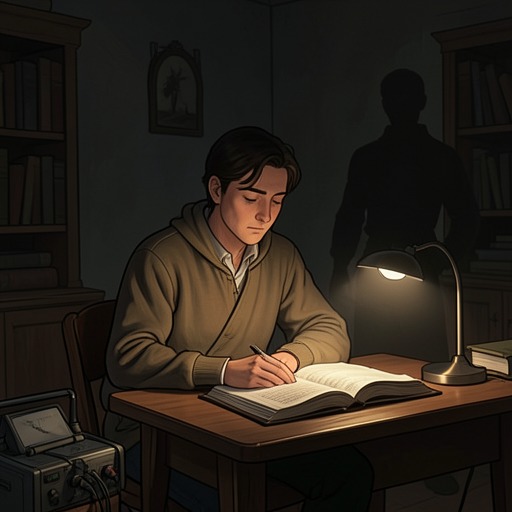
River of Forgetfulness
Life After LifeThe River of Forgetfulness is the river in Plato’s story of Er where souls drink before being sent back to earthly life. In Raymond Moody’s discussion of near-death experiences, it gives mythic form to a striking possibility: that returning to embodied life involves losing knowledge encountered in a timeless state. The comparison connects an ancient story of rebirth with a modern interview account, while Moody presents the resemblance as a shared theme rather than proof that the accounts describe the same event.
The River in Er’s Return
In Plato’s telling, Er is a warrior believed dead who returns to life on his funeral pyre. Before his return, he sees souls being prepared for birth. They travel across a bare plain under oppressive heat and camp by the River of Forgetfulness, whose water cannot be kept in a vessel. Each soul must drink a measure; those who drink more than the allotted amount forget everything. After a sound of thunder and an earthquake, the souls are carried upward toward birth.
Er’s passage differs from theirs. He is not permitted to drink, but cannot explain how he returned to his body. He suddenly regains his sight and finds himself at dawn on the funeral pyre. The river thus belongs to a threshold between the eternal state and embodied life: for the souls preparing to be born, drinking is bound to forgetting; for Er, the return occurs without a remembered account of how it happened.
A Modern Parallel
Moody places this story beside an interview with a woman who described a glimpse of a realm in which all knowledge seemed to exist together beyond ordinary time. People who report this kind of Vision of Knowledge, he says, do not bring omniscience back with them. The experience is difficult to express, and the feeling of knowing everything does not persist after return. Yet, in the woman’s account, the experience did not make further learning pointless; she understood seeking knowledge as part of life’s purpose and as something that could benefit others.
Moody notes that the woman believed her lengthy recuperation had served in part to make her forget almost all the knowledge revealed to her. He interprets this as suggesting a mechanism that blocks knowledge acquired in that state from carrying over into physical existence. Set beside Er’s story, her impression gives forgetting an active role in the return: it is not simply a failure to recall, but a boundary between kinds of existence.
The Comparison’s Limits and Significance
Moody identifies the basic theme in the two accounts as the forgetting of knowledge associated with an eternal state before returning to life. The comparison does not erase the difference between them. Er’s story is presented as metaphorical and poetic, whereas the woman’s report is an interview account; the book uses the myth as a parallel, not as independent verification of her experience. Nor does the woman’s account claim that every person undergoing a near-death experience encounters such a realm. Moody describes the Vision of Knowledge as one of several less-common elements reported by multiple people, particularly among accounts of unusually prolonged encounters.
The River of Forgetfulness therefore serves as a compact image for a problem that Moody’s model cannot resolve through description alone: if knowledge seems complete during an extraordinary encounter, why does so little of it remain available afterward? By bringing Er’s myth beside a contemporary report, the book gives that loss a narrative shape while preserving the interviewee’s sense that learning in ordinary life remains meaningful. The river marks not an end to the search for knowledge, but the divide across which the search must begin again.